Joseph Mohr – the author of "Silent Night" and his connection to Hintersee
Joseph Mohr
as parish priest
in Hintersee
Joseph Mohr, one of the most world-famous lyricists of all time – although most people don't know him by name, but only through his work: the Christmas carol "Silent Night! Holy Night!", which has been translated into more than 300 languages. But who was Joseph Mohr? And what does he have to do with the village of Hintersee?
Joseph Mohr served as parish vicar in Hintersee for a total of nine years, from December 1827 to February 1837. Today's Haus Satzstein, once the outbuilding of the Hintersee inn, is located in the immediate vicinity of the old parish house, Joseph Mohr's residence at the time. Haus Satzstein is one of the oldest buildings in the municipality of Hintersee, dating back to 1748, and remained unchanged until it was renovated in 1989 as part of the town and village renewal initiative. On 2 May 1999, the old building was officially dedicated as a "Schatzkammer Land Salzburg" (Salzburg Treasure Chamber) project and has since been used as a museum with various exhibits in memory, honour, and commemoration of Joseph Mohr.
When Joseph Mohr moved to Hintersee in 1827 ...
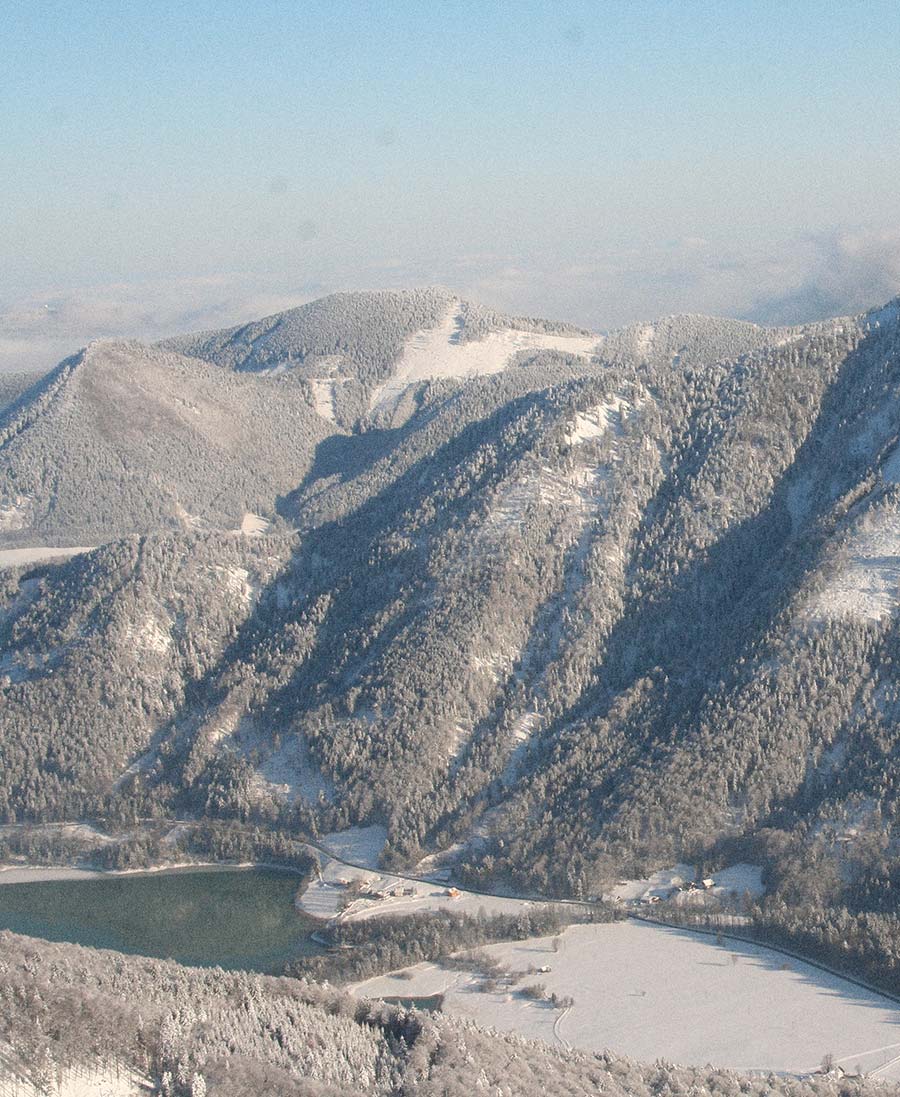
... Austria was going through a very impoverished period. At the time, Hintersee was a small community of just 272 inhabitants, made up mostly of simple working people. The residents lived off forestry, agriculture, and hunting, which often made their living conditions very challenging. Joseph Mohr, the parish vicar, dedicated himself during this difficult time above all to educating the schoolchildren and struggled with the challenges posed by the "knife servant" and teacher Johann Niederreiter. He frequently arrived late to school and preferred to spend his time in the village tavern, which made Mohr's important task of advancing the children's education even more difficult. Mohr's dedication and tireless commitment to the community made him a defining figure in the history of Hintersee, one who is still valued in the region to this day.
Joseph Mohr's good deeds in Hintersee
In Hintersee, Joseph Mohr was known not only as parish vicar, but also for his charitable acts towards the poor population. One of his remarkable deeds was trading with poachers. Since game in Salzburg at the time belonged to the wealthy and the poorer population was not allowed to hunt, poaching was widespread in the hunting grounds around Hintersee. Many people depended on game to feed their families, and poachers earned a small extra income this way. Mohr supported this practice by buying the meat from the poachers and distributing it to poor families with many children – despite his own modest income. However, his willingness to help did not go unnoticed, and it wasn't long before he was reported to the authorities and came into conflict with the law. Mohr's actions show how deeply he cared about the wellbeing of the people in his community, even though it personally got him into difficulties.
Christmas at the time of the author of "Silent Night"
In 1827, the year the first Christmas tree was set up in Salzburg's Alter Markt, Joseph Mohr celebrated his first Christmas in Hintersee. While the Christmas tree was gaining significance in the cities, Christmas in rural and impoverished regions like Hintersee was still celebrated very modestly. Most people lived in poverty, and simple yet meaningful traditions took centre stage. On Christmas Eve, around 5 p.m., the traditional "Raunudeln" were served in Hintersee. This was followed by Midnight Mass at 24:00, and afterwards a hearty meat soup was served to warm everyone up. These modest customs gave people comfort and a sense of togetherness in difficult times.
The heart of the Christmas celebrations in Hintersee were Midnight Mass, the Nativity scene, and the communal singing of "Silent Night! Holy Night!" – customs that remain widespread in Austria today and are still celebrated in many places. In particular, the singing of "Silent Night", the famous Christmas carol written by Joseph Mohr himself, held special significance and united the people of Hintersee during this festive season. Mohr was known for organising the Christmas celebrations with great devotion and for strengthening the sense of community within the small village. In total, he celebrated nine Christmases in Hintersee before moving to Wagrain in the Pongau region in February 1837. There he continued his pastoral work until his death on 4 December 1848.
Visit us at DAS Hintersee and see for yourself how Joseph Mohr lived. Send us an obligation-free holiday enquiry. We look forward to hearing from you!
Most frequently asked questions